If your startup helps defend America in space, you’re now on Washington’s radar.
The Bigger Picture: A Golden Era for Space Innovation
From satellite-based AI systems to hypersonic tracking sensors, 2025 is shaping up as a transformative year for space-tech innovation. With billions flowing into this sector and federal interest at an all-time high, the startup world has rarely been this close to orbit.
- 💼 Want to track the top U.S. startup trends this year? Explore our curated picks in Top US Startups to Watch in 2025
- 🛰️ Curious about surveillance and future laws affecting space-tech? Read more in How Surveillance Laws Could Impact Innovation
- 🇺🇸 Following U.S. politics and its impact on tech markets? Check out Trump-Fed Drama’s Market Impact
- Anduril Industries: Known for its autonomous defense drones and software-backed command systems.
- True Anomaly: Specializes in space-based defense capabilities—especially tracking suspicious satellite behavior.
- Varda Space Industries: Focused on zero-gravity manufacturing.
Even SpaceX, although no longer a startup, continues to win new military launch contracts and deepen its role in national security. This creates a trickle-down effect—encouraging investors to hunt for the “next SpaceX.”
What Does This Mean for the Startup World?
This isn’t just a boom. It’s a strategic pivot. Space-tech has now become a core pillar of both venture funding and federal budgets. Startups that once struggled to justify space infrastructure are now essential partners in U.S. defense planning.
Venture capitalists are shifting strategies too focusing less on consumer tech and more on deeptech and hard science. The message is clear:
If your startup helps defend America in space, you’re now on Washington’s radar.
The Bigger Picture: A Golden Era for Space Innovation
From satellite-based AI systems to hypersonic tracking sensors, 2025 is shaping up as a transformative year for space-tech innovation. With billions flowing into this sector and federal interest at an all-time high, the startup world has rarely been this close to orbit.
- 💼 Want to track the top U.S. startup trends this year? Explore our curated picks in Top US Startups to Watch in 2025
- 🛰️ Curious about surveillance and future laws affecting space-tech? Read more in How Surveillance Laws Could Impact Innovation
- 🇺🇸 Following U.S. politics and its impact on tech markets? Check out Trump-Fed Drama’s Market Impact
- Geopolitical tensions are pushing the U.S. to expand defense capabilities in space.
- Massive defense programs like the $175 billion “Golden Dome” missile defense system are now actively funding space startups for their cutting-edge infrastructure and real-time satellite tracking.
U.S. defense agencies are now looking to small, agile startups instead of legacy contractors. They want faster, smarter, and more responsive systems. This shift is creating huge new opportunities for private companies in launch tech, communication satellites, AI-powered defense analytics, and more.
Who’s Getting Funded?
Some notable startups making waves:
- Anduril Industries: Known for its autonomous defense drones and software-backed command systems.
- True Anomaly: Specializes in space-based defense capabilities—especially tracking suspicious satellite behavior.
- Varda Space Industries: Focused on zero-gravity manufacturing.
Even SpaceX, although no longer a startup, continues to win new military launch contracts and deepen its role in national security. This creates a trickle-down effect—encouraging investors to hunt for the “next SpaceX.”
What Does This Mean for the Startup World?
This isn’t just a boom. It’s a strategic pivot. Space-tech has now become a core pillar of both venture funding and federal budgets. Startups that once struggled to justify space infrastructure are now essential partners in U.S. defense planning.
Venture capitalists are shifting strategies too focusing less on consumer tech and more on deeptech and hard science. The message is clear:
If your startup helps defend America in space, you’re now on Washington’s radar.
The Bigger Picture: A Golden Era for Space Innovation
From satellite-based AI systems to hypersonic tracking sensors, 2025 is shaping up as a transformative year for space-tech innovation. With billions flowing into this sector and federal interest at an all-time high, the startup world has rarely been this close to orbit.
- 💼 Want to track the top U.S. startup trends this year? Explore our curated picks in Top US Startups to Watch in 2025
- 🛰️ Curious about surveillance and future laws affecting space-tech? Read more in How Surveillance Laws Could Impact Innovation
- 🇺🇸 Following U.S. politics and its impact on tech markets? Check out Trump-Fed Drama’s Market Impact
What is space-tech, and why is it suddenly booming?
Space-tech refers to innovations focused on aerospace engineering, satellite communication, space exploration, and defense-related orbit systems. Think SpaceX rockets, satellite internet from low-Earth orbit, or software that helps detect missile threats in real time. And in 2025, it’s getting a lot of attention from the U.S. government.
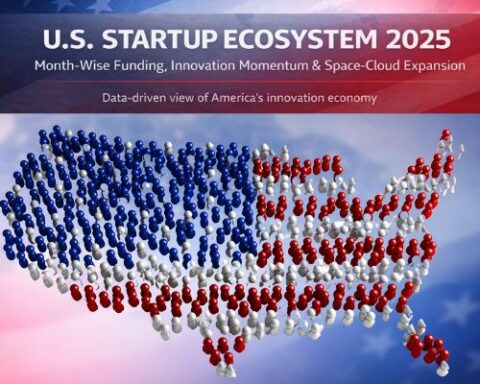
In Q2 of 2025, startups in the space technology sector pulled in $3.1 billion marking the second-highest quarterly funding ever for the category. According to recent reports, this surge was led by growing federal contracts tied to defense modernization and space-based surveillance systems.
Why the Sudden Investment Surge?
Two big reasons:
- Geopolitical tensions are pushing the U.S. to expand defense capabilities in space.
- Massive defense programs like the $175 billion “Golden Dome” missile defense system are now actively funding space startups for their cutting-edge infrastructure and real-time satellite tracking.
U.S. defense agencies are now looking to small, agile startups instead of legacy contractors. They want faster, smarter, and more responsive systems. This shift is creating huge new opportunities for private companies in launch tech, communication satellites, AI-powered defense analytics, and more.
Who’s Getting Funded?
Some notable startups making waves:
- Anduril Industries: Known for its autonomous defense drones and software-backed command systems.
- True Anomaly: Specializes in space-based defense capabilities—especially tracking suspicious satellite behavior.
- Varda Space Industries: Focused on zero-gravity manufacturing.
Even SpaceX, although no longer a startup, continues to win new military launch contracts and deepen its role in national security. This creates a trickle-down effect—encouraging investors to hunt for the “next SpaceX.”
What Does This Mean for the Startup World?
This isn’t just a boom. It’s a strategic pivot. Space-tech has now become a core pillar of both venture funding and federal budgets. Startups that once struggled to justify space infrastructure are now essential partners in U.S. defense planning.
Venture capitalists are shifting strategies too focusing less on consumer tech and more on deeptech and hard science. The message is clear:
If your startup helps defend America in space, you’re now on Washington’s radar.
The Bigger Picture: A Golden Era for Space Innovation
From satellite-based AI systems to hypersonic tracking sensors, 2025 is shaping up as a transformative year for space-tech innovation. With billions flowing into this sector and federal interest at an all-time high, the startup world has rarely been this close to orbit.
- 💼 Want to track the top U.S. startup trends this year? Explore our curated picks in Top US Startups to Watch in 2025
- 🛰️ Curious about surveillance and future laws affecting space-tech? Read more in How Surveillance Laws Could Impact Innovation
- 🇺🇸 Following U.S. politics and its impact on tech markets? Check out Trump-Fed Drama’s Market Impact
Frequently Asked Questions
How much did space-tech startups raise in Q2 2025?
Space-tech startups secured $3.1 billion in funding in Q2 2025, a record quarter driven by US defence contracts, satellite communications expansion, and renewed interest in lunar and orbital infrastructure from both government and commercial clients.
Why is the US defence sector investing heavily in space-tech startups?
The US Department of Defense and Space Force are accelerating investments in commercial space capabilities for satellite communications, intelligence gathering, missile tracking, and rapid launch services. Commercial startups can develop and iterate faster than traditional defence contractors, making them attractive partners for next-generation space programmes.
Which space-tech startups led funding rounds in Q2 2025?
Leading space-tech funding rounds in Q2 2025 included companies focused on satellite manufacturing, hypersonic technology, space logistics, and orbital debris removal. SpaceX remains the dominant force, but a new generation of pure-play startups across launch, comms, and in-space services are attracting significant capital.
What is driving the commercial space industry’s growth in 2025?
Growth is driven by falling launch costs enabled by reusable rockets, surging demand for low-earth orbit satellite broadband, defence spending on resilient space communications, the Artemis programme creating commercial lunar opportunities, and in-space manufacturing and resource extraction becoming technically feasible.
How are space-tech startups different from traditional aerospace contractors?
Space-tech startups operate with software-first development cultures, iterative hardware design, and venture capital funding models that allow faster innovation cycles than traditional prime contractors like Lockheed Martin or Boeing. They focus on specific technology niches rather than full system integration, and often leverage commercial off-the-shelf components to reduce cost.
What opportunities exist for investors in the space-tech sector?
Investors can access space-tech through early-stage venture in launch and satellite companies, growth equity in data and analytics businesses built on satellite imagery and signals, and public market exposure via SPACs and listed companies. The sector benefits from long government contracts, recurring revenue from subscription satellite services, and dual-use commercial and defence demand.
Related coverage: SpaceX Cursor Acquisition 2026 | US Startup Funding Rounds June 2026 | Hark Raises $700M Series A for Personal AI Hardware
Space-Tech Startups Secure $3.1B in Q2 2025 as U.S. Defense Bets Big